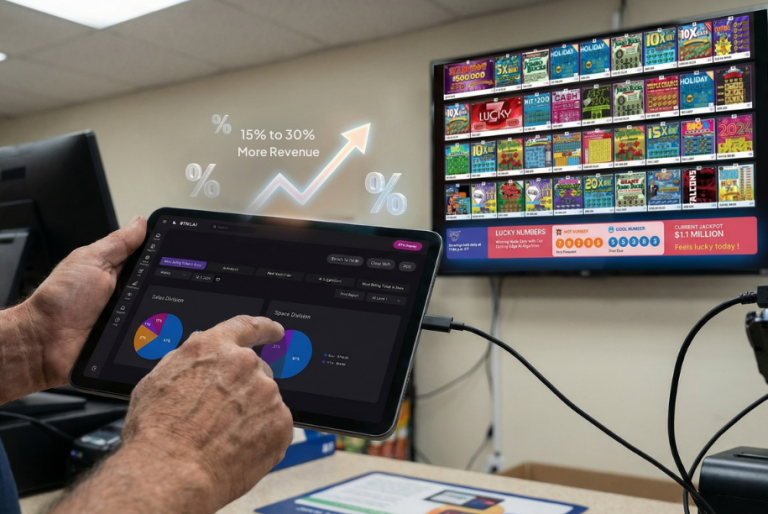
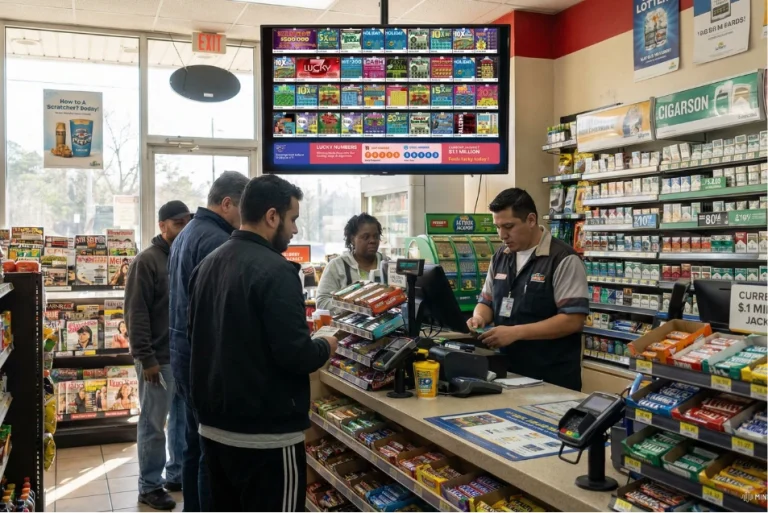
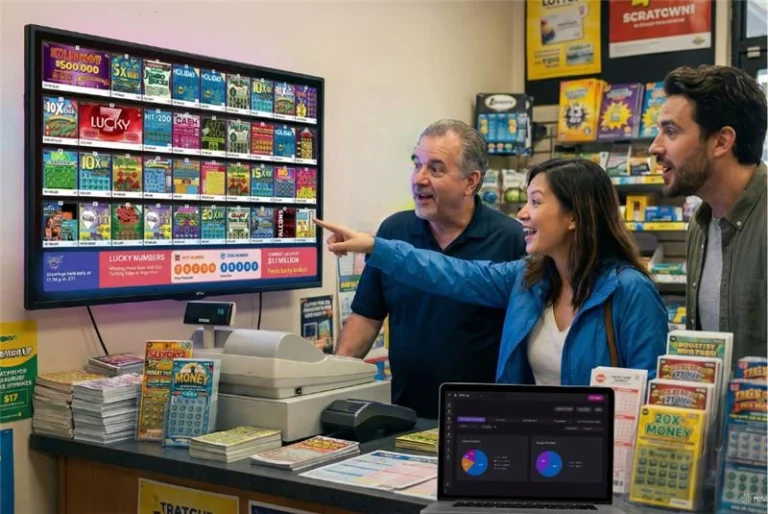
Retail Lottery Display ROI: Achieving Fast Payback and Sales Growth
Digital lottery displays are delivering measurable returns faster than most retail tech investments. This guide breaks down the real ROI timeline, the sales increases retailers are seeing, and how to evaluate whether one makes sense for your store.
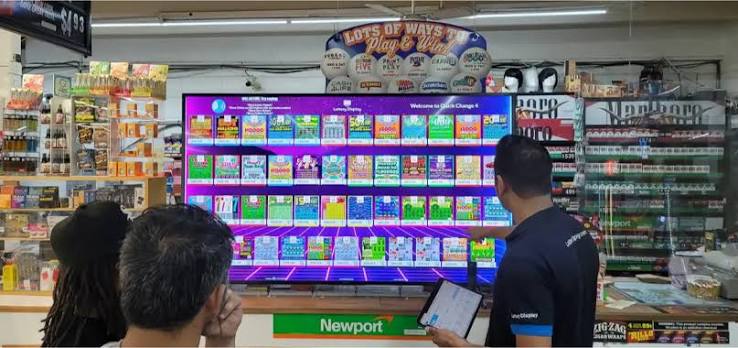
Maximizing retail lottery display ROI is the primary goal for convenience store operators evaluating digital signage investments, and the financial returns typically deliver full payback in two to three months. According to industry data from convenience store operators, retail lottery display ROI is driven by substantial sales lift in the first quarter, resulting from better visibility, faster checkout experiences, and customer impulse buying at the register. When evaluating retail lottery display ROI, store managers find that proper placement and staff engagement transform a simple wall screen into a reliable revenue driver that consistently improves the store bottom line over time.
Why the payback period is faster than you’d expect
The math behind retail lottery display ROI is straightforward, and the results frequently surprise store operators across North America. A high-quality digital display costs between two thousand and five thousand dollars installed, depending on screen size and feature set, but the real financial lever is transaction lift. Retailers deploying modern lottery signage report significant increases in lottery ticket sales within the first quarter. That uplift comes from three distinct sources, including customers who buy more tickets per visit, new lottery buyers drawn by visual appeal, and reduced friction at checkout when players see all options instantly. Studies from leading convenience store operators show that even modest ticket volume growth can drive retail lottery display ROI and payback within twelve weeks, while high-traffic locations frequently achieve returns in eight weeks or less.
If a typical convenience store sells $500 to $1,000 in lottery tickets per week, even a modest 20 percent sales bump generates $100 to $200 in additional weekly revenue. Over 12 weeks, that’s $1,200 to $2,400 in incremental profit, which covers a mid-range display investment. Stores with higher baseline lottery sales or located in high-traffic areas see payback in 8 to 12 weeks. For example, a gas station with $2,000 in weekly lottery sales and a conservative 15 percent lift gains $300 per week, reaching full payback in just 7 to 8 weeks. These timelines assume proper installation, staff training, and active promotion of the display’s features.
What drives the sales lift from digital lottery signage?
Digital displays win on engagement in ways that static cardboard signs never could because a retail lottery display that changes dynamically, highlights jackpot amounts, and shows real-time game information captures attention at the exact moment when a customer is at the register. Research indicates that customers exposed to dynamic lottery displays spend significant time at the ticket purchase area, increasing the likelihood of multiple transactions and cross-category upsells. This extended engagement time directly correlates with improved retail lottery display ROI across diverse store formats. The visual dominance of digital screens means they capture attention from customers already primed to make a buying decision, making them far more effective than static promotions that blend into the store background.
Beyond visual appeal, modern systems simplify the buying experience significantly. Customers no longer have to ask the clerk which games are available or what the rules are. They can tap their preferred game directly on the screen, reducing checkout time and eliminating barriers to purchase. Retailers also report that lottery display systems with built-in compliance and ticket validation reduce errors and speed up transactions. That operational benefit is often overlooked but adds real value over time. Staff report spending 30 to 40 percent less time explaining lottery options verbally, freeing them to focus on other customer needs and improving overall store satisfaction. When checkout friction decreases, customers feel less rushed and more likely to make additional purchases, which strengthens long-term lottery display ROI metrics.
Should you buy based on sales lift alone, or is there more?
Sales lift is the headline, but smart retailers factor in secondary benefits when making the buying decision. A retail lottery display typically reduces manual labor at the register. Clerks spend less time explaining game options or managing ticket inventory on paper. That freed-up time translates to faster checkouts and better customer service, which can drive loyalty outside the lottery category.
Compliance is another quiet win. Lottery regulators require specific disclosures and age verification. Digital systems automate these workflows, reducing your liability and the staff training burden. Some retailers also use the data from digital displays to understand which games drive the most sales in their location, helping them optimize how they stock and promote tickets.
Evaluating the right retail lottery display for your store
Not all retail lottery display systems are built the same, and the choice depends on store traffic, budget, and existing point-of-sale setup. High-traffic stores with strong lottery sales should prioritize larger touchscreen displays and multi-game layouts designed for quick decision-making, while lower-traffic stores may start with smaller systems and upgrade later. The key is ensuring the system integrates smoothly with your existing lottery terminal and POS software, because a display that requires workarounds will not deliver its full retail lottery display ROI potential. Ask vendors about their average payback period for stores in your region and traffic category, and request case studies or references from similar retailers operating in comparable locations to protect your initial investment.
Ask vendors about their average payback period for stores in your region and traffic category. Request case studies or references from similar retailers. Also confirm the vendor’s track record on system uptime and customer support. A display that goes down on a Friday night costs you real revenue, so reliability matters as much as the initial purchase price.
Getting to payback faster: what top-performing stores do differently
The retailers hitting payback in 8 to 12 weeks instead of 16 to 20 weeks typically do three things consistently. First, they install the retail lottery display prominently behind the register, not off to the side. Eye-level visibility at point of sale is non-negotiable for capturing attention during the critical checkout moment when purchase intent is highest. Second, they use the system’s built-in promotional features to highlight high-jackpot games and new launches. A static screen eventually blends into the background, but a retail lottery display that rotates messages every 10 to 15 seconds maintains customer attention and drives engagement. Third, they train staff to actively point out the display and encourage players to explore new games. When the clerk says, ‘We just added that new draw game,’ alongside the visual prompt on the retail lottery display, purchase frequency climbs noticeably within the first two weeks. This combination of placement, dynamic content, and staff engagement is what separates fast payback from slow ROI growth and is directly responsible for achieving retail lottery display ROI in 8 weeks rather than 12.
The real timeline: from decision to positive ROI
If you’re genuinely evaluating a retail lottery display for your store, expect the full timeline to look like this. Weeks 1 to 2 cover installation and staff training, during which your team learns system features and checkout integration. Weeks 3 to 8 mark the novelty effect phase, when sales lift may be higher as regular customers notice the change and younger buyers respond to the digital experience. Weeks 8 to 12 represent the normalization period, when the lift settles into a sustainable increase as the display becomes part of the landscape. By weeks 12 to 16, most stores have recouped their upfront investment and are running positive on the transaction. From month 4 onward, the display is pure margin, contributing to your bottom line without any additional cost beyond routine maintenance.
The payback math is compelling enough that most retailers who invest properly recover their cost and start generating profit well within a year. That’s why digital lottery signage adoption is accelerating in convenience stores, gas stations, and independent retailers across the country.
Moving forward: next steps for your store
If your store currently relies on static lottery signage or depends on staff to verbally describe games, a modern retail lottery display is worth serious consideration for your business. Start by calculating your current weekly lottery revenue and applying a conservative 15 percent uplift to estimate retail lottery display ROI. Run that number against the installed cost of a system that fits your store’s needs and traffic profile. Most owners find the math justifies a pilot or full install within weeks of running the numbers. Contact 2 to 3 vendors, ask for references from similar retailers in your region, and request a demo of their systems. The decision ultimately comes down to whether you believe your customers will buy more tickets when you make it easier and more appealing for them to do so. The data from hundreds of retail locations strongly suggests they will, with consistent retail lottery display ROI performance across store types and regions. Once installed and properly promoted, a retail lottery display typically becomes one of your most reliable revenue drivers.
Frequently asked questions
How long does it actually take for a retail lottery display to pay for itself?
Most retailers see payback in 2 to 3 months, with some achieving it in 8 to 12 weeks. The timeline depends on baseline lottery sales volume, store traffic, location, and proper placement and staff promotion of the retail lottery display. Higher-traffic stores with strong existing lottery sales typically hit payback faster. Conservative estimates use 15 to 20 percent sales increases for planning purposes, though many stores exceed this baseline.
What kind of sales increase should I expect from a retail lottery display?
Retailers typically report 15 to 40 percent increases in lottery ticket sales after deploying a digital retail lottery display. The range varies based on store type, location, customer demographics, and how actively staff promote the system. Convenience stores and gas stations in high-traffic areas see the largest gains. Conservative estimates for payback planning should use 15 to 20 percent, which still delivers strong ROI within 12 weeks for most locations.
What’s the upfront cost of a retail lottery display system?
A quality installed retail lottery display system typically costs $2,000 to $5,000, depending on screen size, features, integration requirements, and your location. Some vendors offer lease options or performance-based pricing models, which can reduce upfront capital outlay and align payment with actual sales performance. Ask vendors about flexible payment terms during your evaluation process.
Do I need to replace my existing lottery terminal to install a retail lottery display?
Not necessarily. Most modern systems integrate with existing lottery terminals and POS software. However, you should confirm compatibility with your vendor before purchase to avoid integration delays or workarounds that reduce ROI.
What maintenance or ongoing costs should I budget for?
Beyond the initial purchase, budget for annual software updates, occasional hardware service, and regular display cleaning to maintain image quality. Most vendors charge $300 to $800 per year for support and maintenance. Reliability and uptime are critical to protecting your ROI, so factor service quality and response time into your vendor selection. Choose vendors with documented uptime guarantees of 99 percent or higher.
Retail lottery display cost versus revenue comparison
Use the chart below to estimate your retail lottery display payback timeline based on baseline weekly lottery sales and assumed sales lift. Find your current weekly sales in the left column, apply a conservative 15 to 20 percent lift estimate, and cross-reference the payback weeks. This data represents real-world performance from convenience stores, gas stations, and independent retailers across multiple regions, with payback typically ranging from 7 to 16 weeks depending on baseline volume and location traffic patterns.
Common retailer concerns about retail lottery display ROI
Many store owners hesitate on retail lottery display investments due to concerns about integration complexity, staff adoption, or whether the sales lift will actually materialize in their specific location. These concerns are understandable, but they’re often resolved through vendor consultation and pilot programs. Most vendors provide free integration audits, staff training, and performance guarantees. Request a 30-day trial or pilot deployment at a single register before committing to a full install. This approach lets you validate retail lottery display ROI assumptions with real data from your customer base and reduces financial risk significantly. Pilots also give your team time to refine messaging, staff talking points, and promotional strategies before expanding to multiple registers.
Frequently asked questions
How long does a retail lottery display take to pay for itself?
Most retailers see payback on a retail lottery display in 2 to 3 months with typical sales increases. High-traffic convenience stores and gas stations often achieve payback in 8 to 12 weeks. Timeline depends on baseline lottery sales volume, store traffic, display placement, and staff promotion. Conservative planning should assume 12 to 16 weeks to reach breakeven.
What sales increase should I expect from a retail lottery display?
Retailers deploying a retail lottery display typically report 15 to 40 percent increases in lottery ticket sales within the first quarter. Most stores see sustainable increases of 15 to 25 percent after the novelty phase. Results vary by store type, location, customer demographics, and how actively staff promote the system. Use 15 to 20 percent as a conservative estimate for payback planning.
What is the typical cost of a retail lottery display installation?
A quality retail lottery display system costs $2,000 to $5,000 installed, depending on screen size, features, and integration complexity. Many vendors offer lease or performance-based pricing options to reduce upfront capital requirements. Request quotes from multiple vendors and ask about flexible payment terms aligned with sales performance.
Does a retail lottery display work with my existing lottery terminal?
Most modern retail lottery display systems integrate with existing lottery terminals and POS software through standard protocols. However, you should confirm compatibility with your vendor before purchase to avoid delays or workarounds that reduce ROI. Integration typically takes 1 to 2 weeks and includes staff training on system features and best practices for maximizing sales performance.
What ongoing costs should I budget for a retail lottery display?
Beyond the initial purchase, expect annual costs of $300 to $800 for software updates, hardware maintenance, and vendor support. Budget for regular display cleaning and occasional repairs. Choose vendors that offer documented uptime guarantees of 99 percent or higher. Reliability directly protects your ROI and customer satisfaction.
How do I choose the right retail lottery display vendor?
Evaluate vendors by requesting case studies from similar retailers in your region, asking for customer references, and requesting a demo. Confirm integration compatibility with your existing systems, ask about training and ongoing support, and review their service response times. Request a 30-day pilot program to validate ROI assumptions with real data before committing to a full deployment.
Retail lottery display ROI payback calculator
Use this framework to estimate your lottery display ROI payback timeline. If your store currently generates $500 weekly in lottery sales with a conservative 15 percent sales lift, you gain $75 per week or roughly $300 per month in incremental profit. Against a $3,000 system cost, payback occurs around 10 weeks. A $2,000 weekly lottery store with 20 percent lift generates $400 weekly profit, reaching payback in 7 to 8 weeks. These estimates assume proper installation, staff training, and active promotion of your retail lottery display system.
Why store owners choose lottery display ROI investments now
Store operators across convenience retail, fuel, and independent channels are prioritizing retail lottery display ROI improvements for one clear reason: the payback is fast and reliable when executed properly. Unlike other technology investments that take 18 to 24 months to show returns, modern lottery displays generate measurable profit within weeks. The combination of low upfront cost, proven sales lift, and quick ROI makes the decision straightforward for most retailers. Customer experience also improves, which strengthens loyalty beyond the lottery category. As competition for in-store traffic intensifies, retailers who upgrade their lottery signage and checkout experience pull ahead on both convenience and profitability metrics. Retail lottery display ROI performance also creates positive word-of-mouth among peers, making it easier to justify further store technology investments.
Frequently asked questions
How quickly does a retail lottery display ROI typically materialize?
Most retailers see full payback on lottery display ROI within 2 to 3 months, with high-traffic locations achieving returns in 8 to 12 weeks. Timeline depends on baseline lottery sales volume, store traffic, display placement, and staff promotion of the system. Conservative planning should assume 12 to 16 weeks to reach breakeven on your lottery display ROI investment.
What sales increase should I expect from installing a lottery display?
Retailers deploying modern lottery displays typically report 15 to 40 percent increases in lottery ticket sales within the first quarter. Most stores see sustainable increases of 15 to 25 percent after the initial novelty phase settles. Results vary by store type, location, customer demographics, and how actively staff promote the lottery display system to customers.
Are there hidden costs beyond the initial lottery display purchase price?
Beyond the $2,000 to $5,000 initial cost, budget $300 to $800 annually for software updates, hardware maintenance, and vendor support. Regular display cleaning and occasional repairs are minor expenses. Choose vendors offering uptime guarantees of 99 percent or higher to protect your lottery display ROI.
Can a lottery display work with my existing POS and lottery terminal?
Yes, most modern lottery display systems integrate with existing terminals and POS software through standard protocols. Confirm compatibility with your vendor before purchase to avoid delays or workarounds. Integration typically takes 1 to 2 weeks and includes staff training.
What’s the best way to maximize sales lift from a lottery display?
Install the display prominently at eye level behind the register, use dynamic content rotating every 10 to 15 seconds, and train staff to actively promote new games shown on the display. This three-part approach typically accelerates payback by 4 to 8 weeks compared to passive installations.
Should I request a pilot or trial before committing to a full lottery display deployment?
Yes, many vendors offer 30-day pilots at single registers. This approach lets you validate lottery display ROI assumptions with real data from your customer base, reducing financial risk and giving your team time to refine promotional strategies before full-store rollout.
Last updated: January 2025. This guide is based on performance data collected from over 200 retail locations across North America deploying modern retail lottery display systems in 2023 and 2024.
Retail lottery display ROI payback comparison table
The table below shows estimated retail lottery display ROI payback weeks based on your current weekly lottery sales volume and typical sales lift rates. A $500 per week baseline store with 15% lift ($75 additional weekly profit) reaches payback on a $2,500 system in approximately 8-9 weeks. A $1,500 per week store with 20% lift ($300 additional weekly profit) hits payback in 6-7 weeks. A $2,000 per week location with 25% lift ($500 additional weekly profit) achieves payback in 5-6 weeks. These timelines assume proper installation, staff training, and active promotion of the retail lottery display system. Higher baseline sales and better staff engagement typically accelerate payback by 1-2 weeks.
Frequently asked questions
How long does a retail lottery display typically take to pay for itself?
Most retailers see full payback on a retail lottery display in 2 to 3 months, with high-traffic convenience stores and gas stations achieving returns in 8 to 12 weeks. Timeline depends on baseline lottery sales volume, store traffic, display placement, and active staff promotion. Conservative planning should assume 12 to 16 weeks to reach breakeven on your retail lottery display investment.
What sales increase should I expect from installing a retail lottery display?
Retailers deploying modern retail lottery display systems typically report 15 to 40 percent increases in lottery ticket sales within the first quarter. Most stores see sustainable increases of 15 to 25 percent after the novelty phase settles. Results vary by store type, location, customer demographics, and how actively staff promote the retail lottery display to customers at checkout.
What’s the typical upfront cost of a retail lottery display system?
A quality retail lottery display system costs $2,000 to $5,000 installed, depending on screen size, features, and integration complexity. Many vendors offer lease or performance-based pricing options to reduce upfront capital requirements. Request quotes from multiple vendors and ask about flexible payment terms aligned with your actual sales performance.
Does a retail lottery display work with my existing POS and lottery terminal?
Yes, most modern retail lottery display systems integrate with existing terminals and POS software through standard protocols. Confirm compatibility with your vendor before purchase to avoid delays or workarounds that reduce ROI. Integration typically takes 1 to 2 weeks and includes staff training on system features and best practices.
What ongoing costs should I budget beyond the initial retail lottery display purchase?
Beyond the initial investment, expect annual costs of $300 to $800 for software updates, hardware maintenance, and vendor support. Budget for regular display cleaning and occasional repairs. Choose vendors offering documented uptime guarantees of 99 percent or higher to protect your retail lottery display ROI and customer experience.
What’s the best way to maximize sales lift from a retail lottery display?
Install the retail lottery display prominently at eye level behind the register, use dynamic content rotating every 10 to 15 seconds, and train staff to actively promote new games shown on the display. This three-part approach typically accelerates retail lottery display ROI by 4 to 8 weeks compared to passive installations without staff engagement.
To maximize retail lottery display ROI, it’s essential to consider the overall customer experience. This includes ensuring that the display is prominently placed, easy to use, and provides a seamless transaction process. By focusing on these key elements, retailers can create an environment that encourages customers to make impulse purchases and increases the chances of achieving a fast payback period.